Posted by: Muhammad Asad Ishaq [Article: BMI – Body Mass Index]
Body Mass Index (BMI): Meaning, History, Uses, BMI Ranges, Obesity Statistics & Calculation
What is BMI?
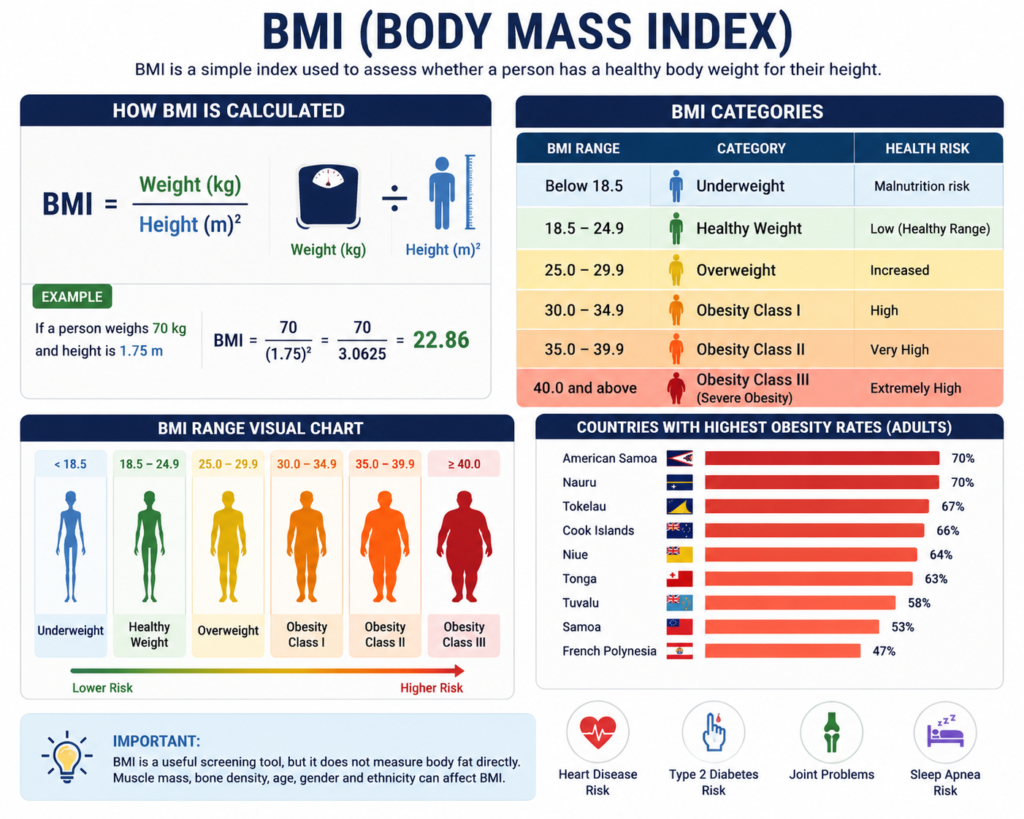
Body Mass Index (BMI) is a simple numerical value used to estimate whether a person’s body weight is healthy in relation to their height. It is one of the most widely used health screening tools worldwide and helps identify whether an individual is underweight, at a healthy weight, overweight, or obese. Although BMI does not directly measure body fat, it provides a quick and inexpensive method for assessing weight-related health risks.
BMI is commonly used by doctors, hospitals, fitness trainers, insurance companies, researchers, and public health organizations to monitor weight trends across populations.
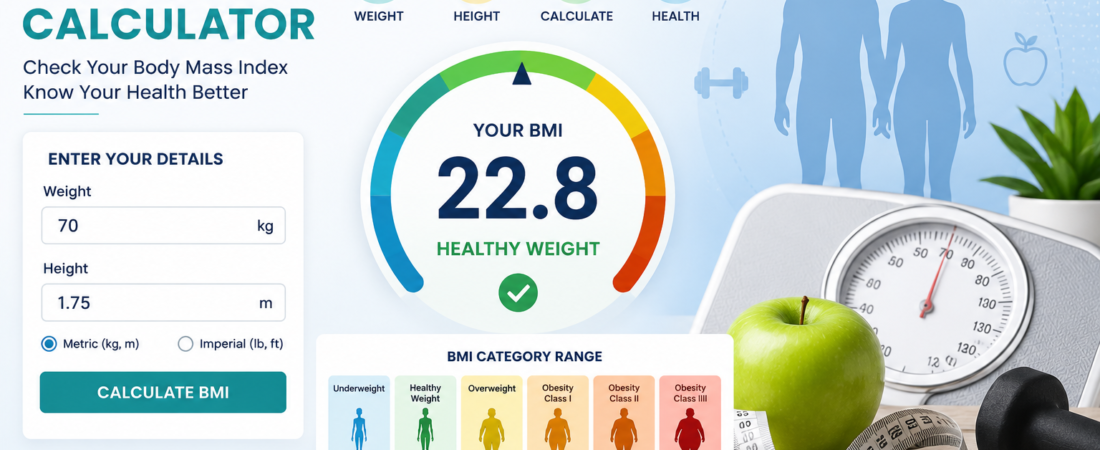
Use our Free BMI Calculator that will give you a better idea of BMI in more professional way.
Brief History of BMI
The Body Mass Index was developed in 1832 by the Belgian mathematician, astronomer, and statistician Adolphe Quetelet. Originally known as the Quetelet Index, it was designed to study the physical characteristics of populations rather than individuals.
In the 1970s, physiologist Ancel Keys demonstrated that this index was a practical way to estimate body fat at the population level and coined the term Body Mass Index (BMI). Today, organizations such as the World Health Organization (WHO) and the Centers for Disease Control and Prevention (CDC) use BMI as a standard screening tool.
Why is BMI Important?
BMI helps identify people who may be at increased risk of health conditions related to body weight. It is not a diagnostic test but serves as an initial screening method.
BMI is useful for:
- Assessing whether body weight is within a healthy range.
- Identifying risks associated with overweight and obesity.
- Monitoring weight-loss or fitness progress.
- Supporting medical evaluations.
- Conducting public health and research studies.
- Helping insurance and healthcare providers assess health risks.
BMI Categories
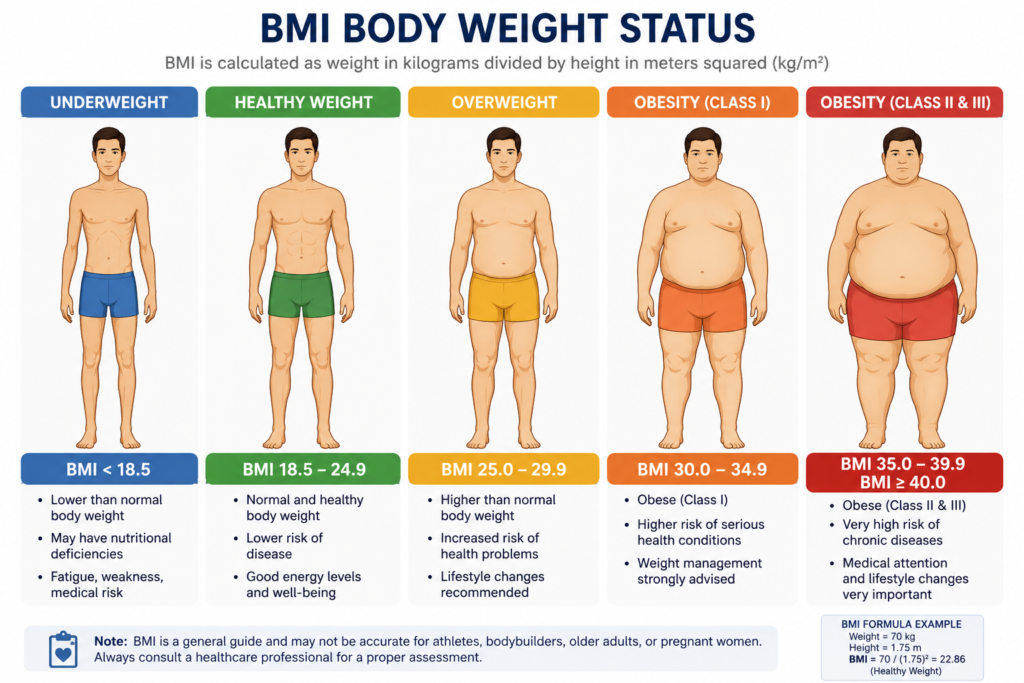
Adults are generally classified using the following BMI ranges:
| BMI Value | Category |
|---|---|
| Below 18.5 | Underweight |
| 18.5 – 24.9 | Healthy Weight |
| 25.0 – 29.9 | Overweight |
| 30.0 – 34.9 | Obesity Class I |
| 35.0 – 39.9 | Obesity Class II |
| 40.0 and above | Obesity Class III (Severe Obesity) |
Mathematical Formula for BMI
BMI is calculated using the following formula:
Metric Formula
BMI = Weight (kg) ÷ Height² (m²)
Example
Weight = 70 kg
Height = 1.75 m
Step 1:
Height² = 1.75 × 1.75 = 3.0625
Step 2:
BMI = 70 ÷ 3.0625 = 22.86
Result: BMI = 22.9, which falls within the Healthy Weight category.
Health Risks Associated with High BMI
A higher BMI may increase the risk of several health conditions, including:
- Type 2 Diabetes
- High Blood Pressure
- Heart Disease
- Stroke
- Sleep Apnea
- Osteoarthritis
- Fatty Liver Disease
- Certain Types of Cancer
Maintaining a healthy BMI through balanced nutrition and regular physical activity can help reduce these risks.
Countries with the Highest Obesity Rates
Several countries have particularly high adult obesity rates, especially in the Pacific region.
| Country | Approximate Adult Obesity Rate |
|---|---|
| American Samoa | ~70% |
| Nauru | ~70% |
| Tokelau | ~67% |
| Cook Islands | ~66% |
| Niue | ~64% |
| Tonga | ~63% |
| Tuvalu | ~58% |
| Samoa | ~53% |
| French Polynesia | ~47% |
Among larger and more familiar countries, high obesity rates are seen in:
- United States
- Egypt
- Qatar
- Kuwait
- Saudi Arabia
- Turkey
- Australia
- United Arab Emirates
Why Are Obesity Rates Increasing?
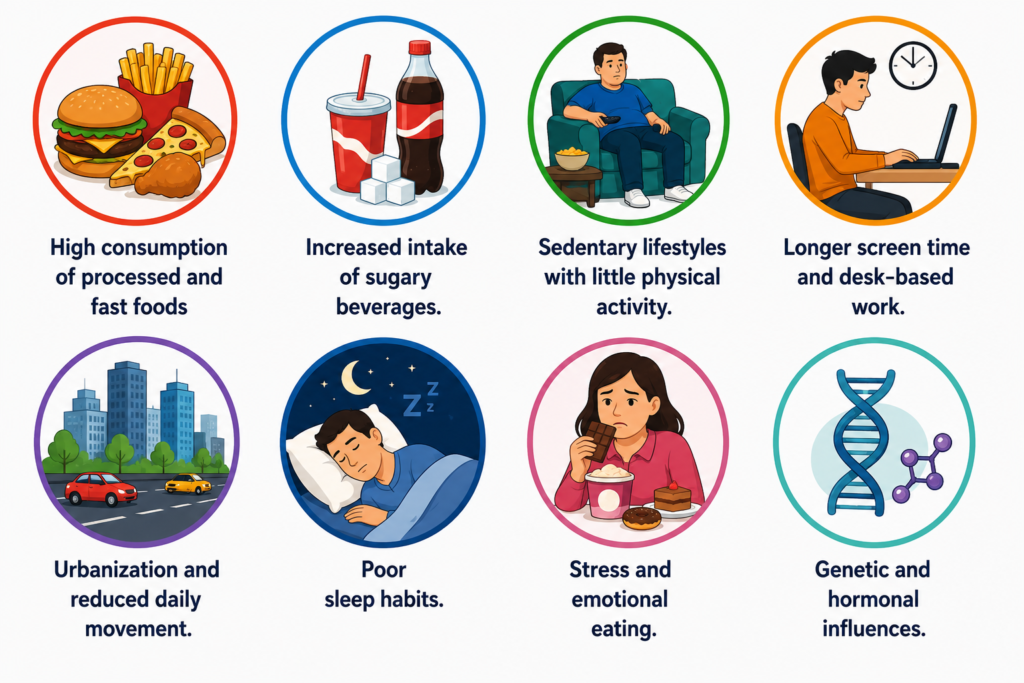
Several lifestyle and environmental factors contribute to rising obesity rates around the world:
- High consumption of processed and fast foods.
- Increased intake of sugary beverages.
- Sedentary lifestyles with little physical activity.
- Longer screen time and desk-based work.
- Urbanization and reduced daily movement.
- Poor sleep habits.
- Stress and emotional eating.
- Genetic and hormonal influences.
Limitations of BMI
Although BMI is a useful screening tool, it has limitations.
For example:
- It cannot distinguish between muscle and fat.
- Athletes with high muscle mass may have a high BMI but low body fat.
- Older adults may have normal BMI but reduced muscle mass.
- BMI does not measure fat distribution, which also affects health risk.
Therefore, healthcare professionals often combine BMI with waist circumference, body fat percentage, medical history, and other clinical assessments.
Conclusion
Body Mass Index remains one of the simplest and most widely used methods for evaluating healthy body weight. While it is not a perfect measure of body fat, it provides valuable insight into potential health risks associated with being underweight, overweight, or obese. Understanding your BMI can be an important first step toward improving overall health through better nutrition, regular exercise, and healthier lifestyle choices.
For more information related Health & Fitness articles please click here.
For BMI Calculator please click here
Leave a Reply