Posted by: Muhammad Asad Ishaq (7 Underrated Destinations in Eastern Europe)
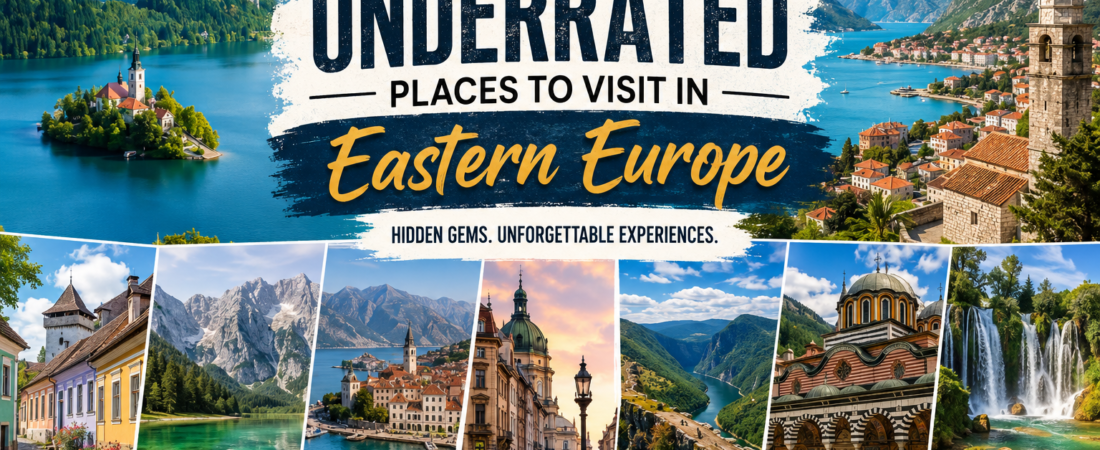
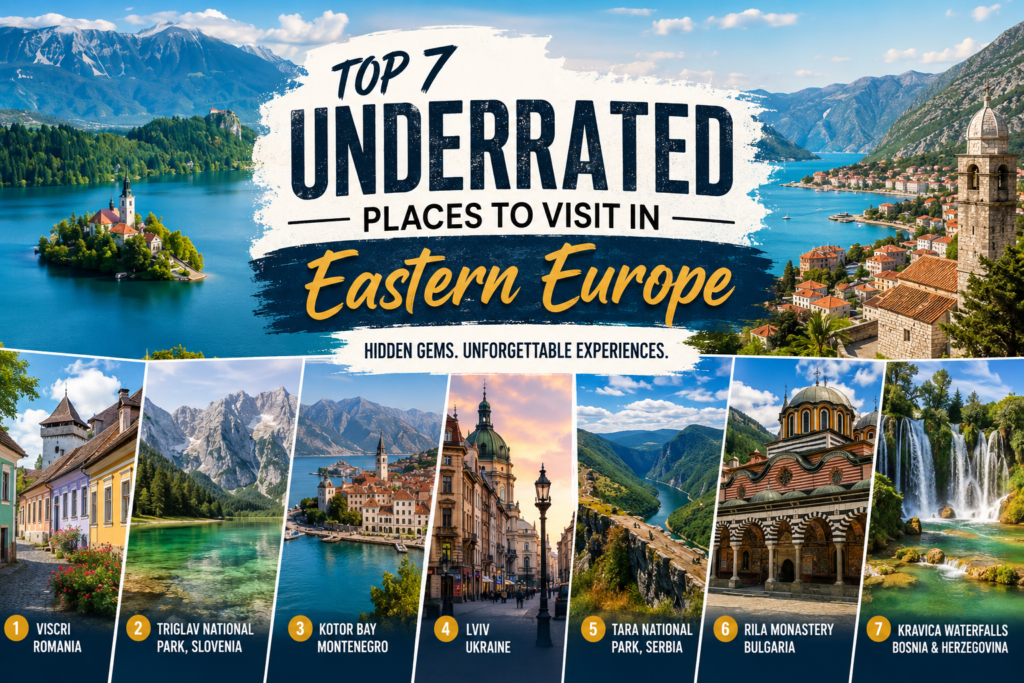
Western Europe gets all the postcards — Paris, Rome, Santorini — but tucked into the folds of Eastern Europe are villages, national parks, and monasteries that rival anything the continent’s tourist trail has to offer, minus the crowds and the inflated prices. From fortified Saxon villages in Transylvania to turquoise waterfalls in the Balkans, this region rewards travelers who venture off the beaten path. Here’s a guide to seven of Eastern Europe’s most beautiful and least appreciated destinations.
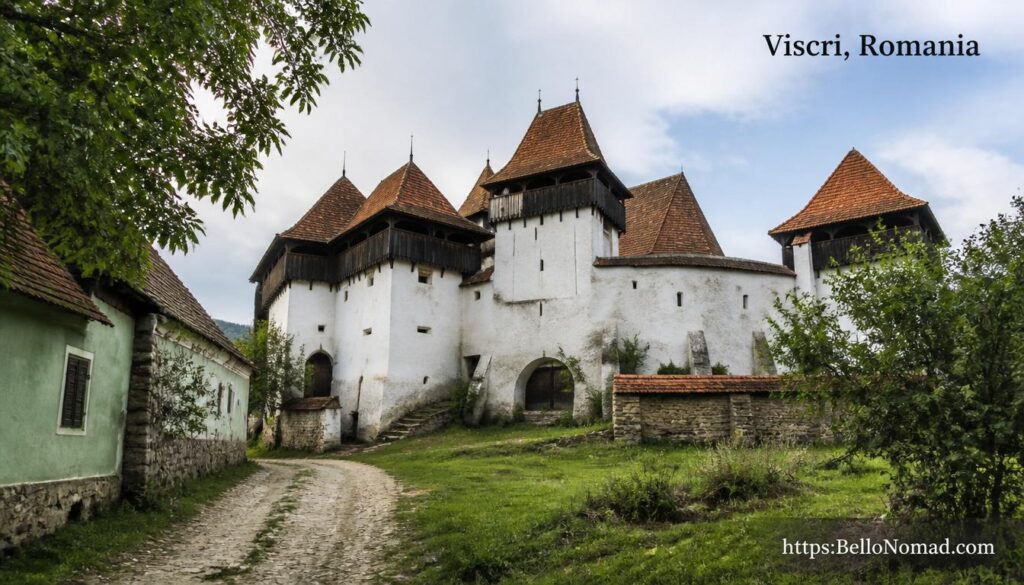
1. Viscri, Romania — Village Life & Culture
Deep in the Transylvanian countryside, Viscri feels frozen in time. This tiny Saxon village is built around a 12th-century fortified church, one of several UNESCO-listed fortified churches scattered across the region, and its dirt roads, horse-drawn carts, and pastel farmhouses have barely changed in generations. King Charles III famously fell in love with Viscri and owns a restored guesthouse here, which helped put the village on the map for conservation-minded travelers.
- Distance from capital: Roughly 260 km from Bucharest (about 4 hours by car)
- Currency: Romanian Leu (RON)
- Language: Romanian, with a lingering Saxon-German cultural imprint
- Best for: 1–2 days of slow travel, rural culture, and photography
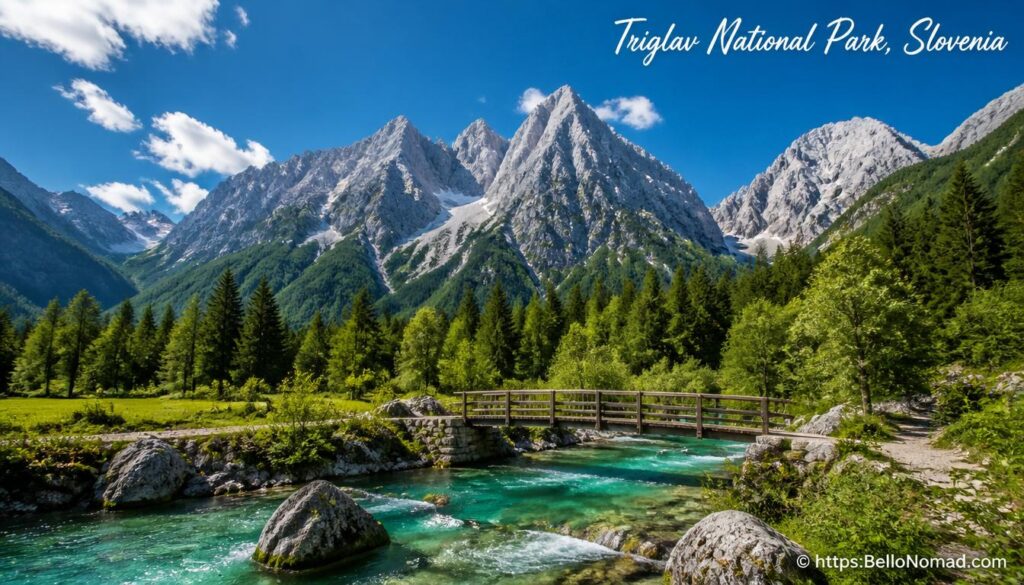
2. Triglav National Park, Slovenia — Hiking & Alpine Scenery
Named after Slovenia’s highest peak, Triglav National Park is the country’s only national park and covers nearly the entire Julian Alps region. Emerald rivers like the Soča carve through limestone gorges, while alpine meadows and glacial lakes make it one of the most photogenic hiking destinations in Europe. The park has long been central to Slovenian national identity — Triglav even appears on the national flag.
- Distance from capital: About 60–80 km from Ljubljana to the park’s southern edges
- Currency: Euro (€)
- Language: Slovenian
- Best for: 3–5 days of hiking, alpine lakes, and outdoor adventure
3. Bay of Kotor, Montenegro — Coastal Landscapes
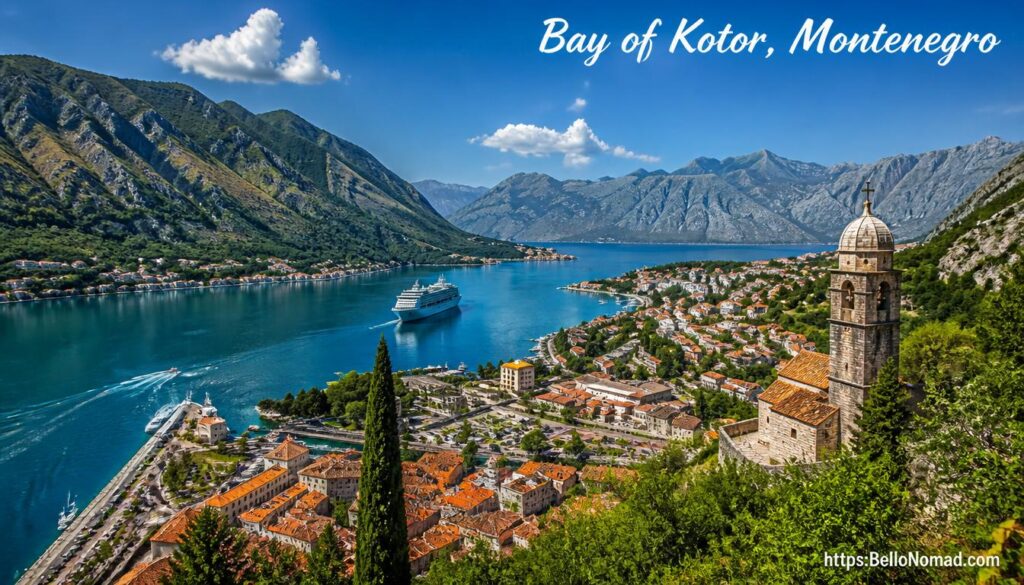
Often called Europe’s southernmost fjord (though technically a submerged river canyon), the Bay of Kotor is a dramatic stretch of coastline where limestone mountains plunge straight into the Adriatic. The walled old town of Kotor, with roots stretching back to Roman times and a medieval core shaped by Venetian rule, sits at the bay’s edge and is a UNESCO World Heritage Site in its own right.
- Distance from capital: About 90 km from Podgorica (roughly 1.5 hours)
- Currency: Euro (€), used unofficially since Montenegro isn’t in the Eurozone
- Language: Montenegrin
- Best for: 2–3 days of coastal exploring, boat trips, and old-town wandering
4. Lviv, Ukraine — Architecture & Cafés
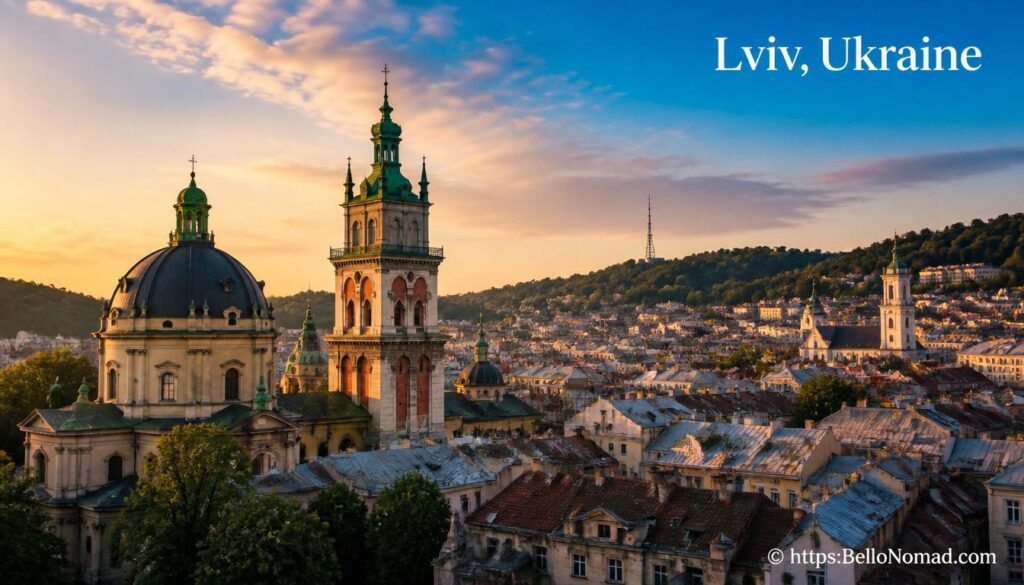
Lviv’s Habsburg-era architecture, cobblestone squares, and deep coffeehouse culture have earned it comparisons to Vienna and Prague. Founded in the 13th century, the city passed through Polish, Austro-Hungarian, and Soviet hands, and each era left its mark on the skyline. Its historic center is UNESCO-listed, and the city remains a cultural heart of western Ukraine.
Note: Travel conditions in Ukraine are affected by the ongoing conflict. Prospective visitors should check current government travel advisories before planning a trip.
- Distance from capital: About 540 km from Kyiv
- Currency: Ukrainian Hryvnia (UAH)
- Language: Ukrainian
- Best for: 2–3 days of architecture, museums, and café culture
5. Tara National Park, Serbia — Nature & Viewpoints
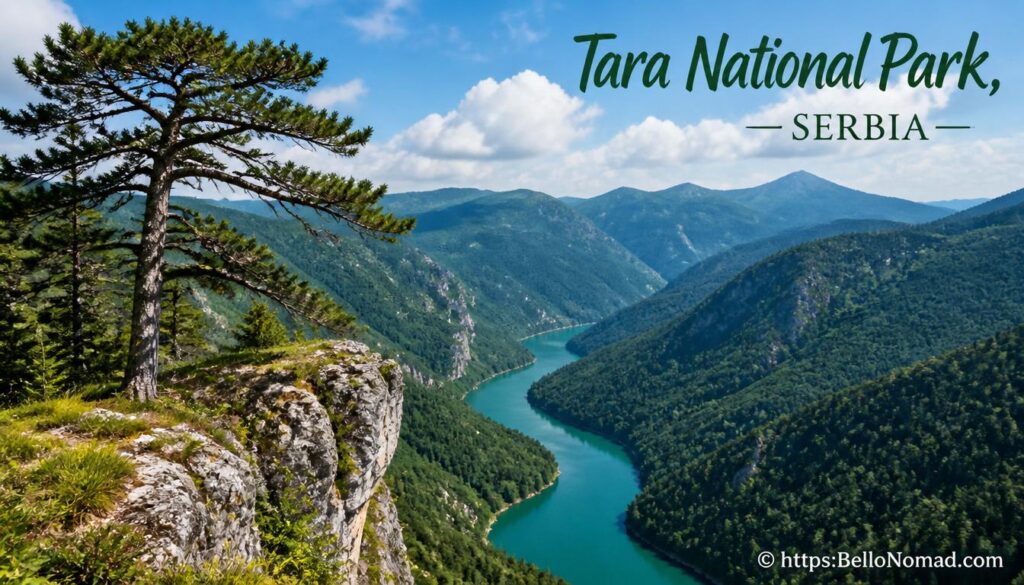
Tara National Park sits in western Serbia along a dramatic bend of the Drina River, and its most famous sight — the Banjska Stena viewpoint — offers a sweeping panorama over the river canyon that has become one of the most photographed spots in the Balkans. Dense pine and beech forests, rare wildlife, and small mountain villages round out the appeal.
- Distance from capital: About 180–200 km from Belgrade (roughly 3 hours)
- Currency: Serbian Dinar (RSD)
- Language: Serbian
- Best for: 2–3 days of nature walks and scenic viewpoints
6. Rila Monastery, Bulgaria — History & Spirituality
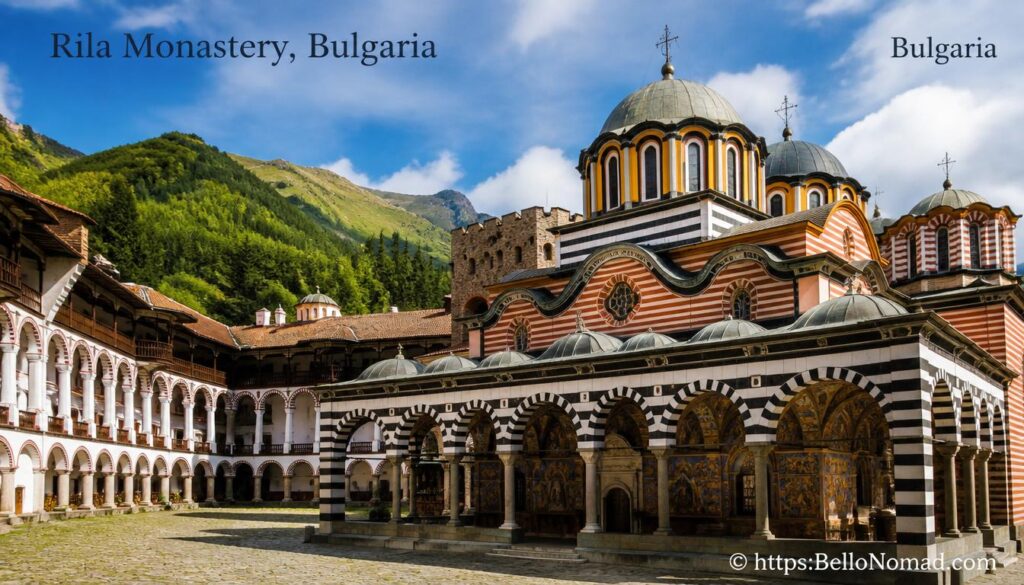
Founded in the 10th century by the hermit St. Ivan of Rila, this monastery is Bulgaria’s largest and most important Eastern Orthodox monastery and a UNESCO World Heritage Site. Its striking striped arches, vivid frescoes, and mountain setting in the Rila range make it one of the most visually arresting religious sites in the Balkans.
- Distance from capital: About 120 km from Sofia (roughly 2 hours)
- Currency: Bulgarian Lev (BGN)
- Language: Bulgarian
- Best for: A 1-day trip combining history, architecture, and spirituality
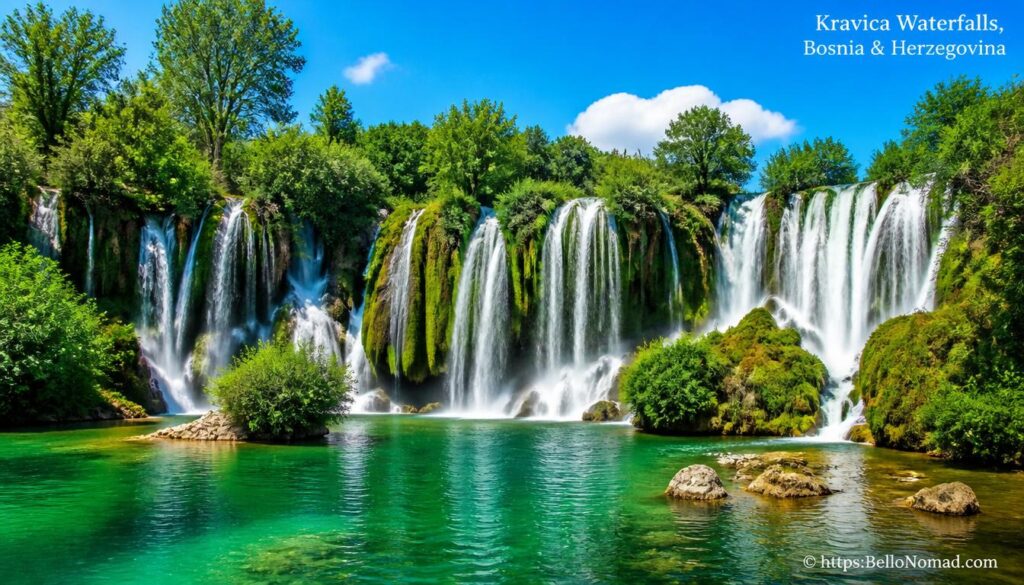
7. Kravica Waterfalls, Bosnia & Herzegovina — Waterfalls & Swimming
Often described as a smaller version of Croatia’s Plitvice Lakes, Kravica is a horseshoe-shaped waterfall on the Trebižat River where water cascades roughly 25 meters into a wide turquoise pool. Unlike many of Europe’s famous waterfalls, swimming is actually allowed here, making it a favorite summer escape for locals and increasingly for travelers based in nearby Mostar.
- Distance from capital: About 130 km from Sarajevo, though it’s much closer (around 40 km) to Mostar
- Currency: Bosnian Convertible Mark (BAM)
- Language: Bosnian (closely related to Croatian and Serbian)
- Best for: A 1-day trip for swimming and waterfall views
Why These Places Deserve a Spot on Your Itinerary
What unites these seven destinations is the sense of discovery they offer. Eastern Europe’s history — shaped by empires, medieval trade routes, and religious traditions — is still visible in its architecture and villages, but hasn’t yet been reshaped by mass tourism. Currencies are generally favorable for travelers coming from Western Europe or North America, infrastructure has improved significantly over the past decade, and English is increasingly spoken in tourist-facing businesses even in more remote areas.
For travelers planning a longer Balkan or Central European route, these destinations pair naturally with each other — Kotor and Tara National Park sit within a few hours of one another, while Rila Monastery makes an easy day trip from Sofia before continuing toward Bulgaria’s Black Sea coast. Whichever combination you choose, these underrated corners of Eastern Europe offer some of the continent’s best scenery and culture, often at a fraction of the cost and crowd of their Western European counterparts.
For more information & articles visit: Travel Section.
Leave a Reply